

Ayurvedic products and herbs, Licorice, Uncategorized
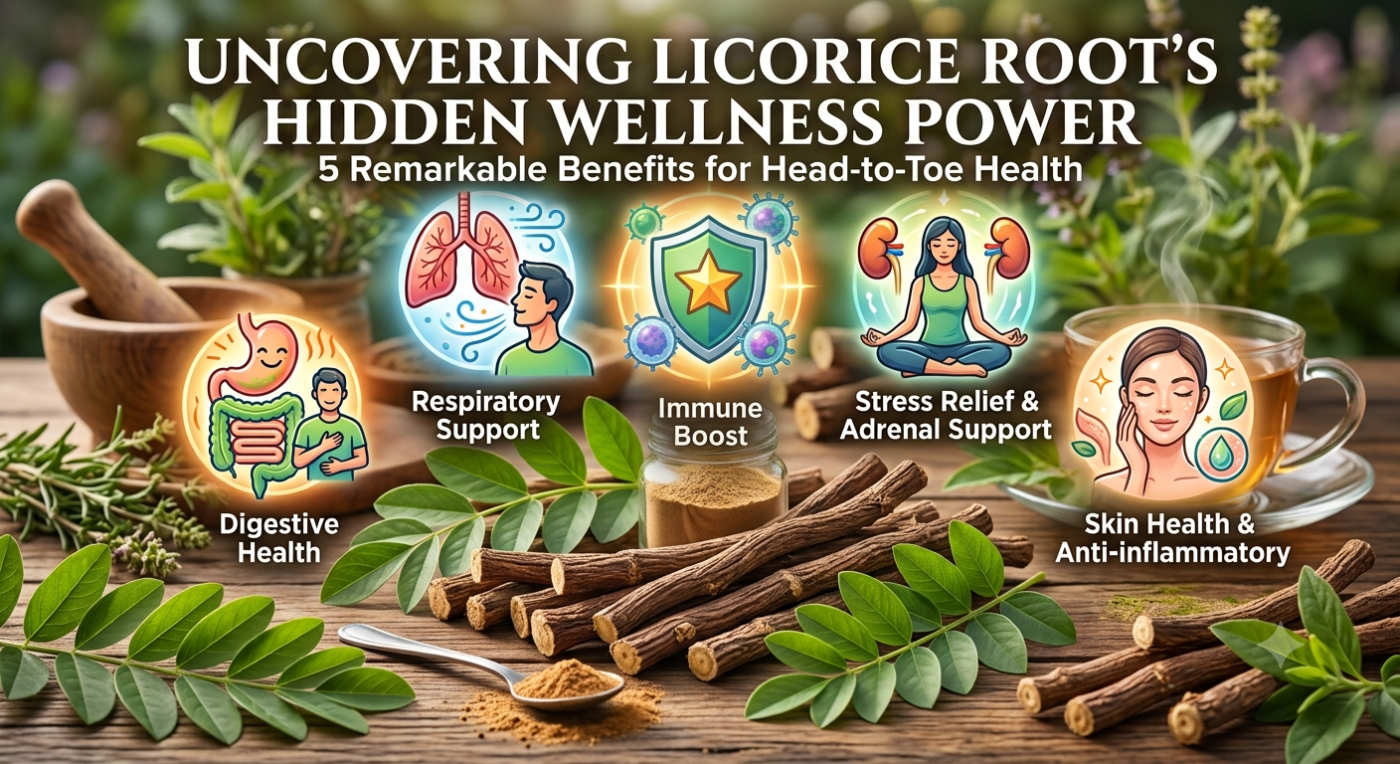
Top 5 Health Benefits of Licorice Root
Sep
Licorice root is a naturally sweet root traditionally valued in herbal practices for its distinctive flavor and wide range of traditional uses. Derived from the Glycyrrhiza glabra plant, licorice has been used for centuries in different cultures and is also commonly found in teas, foods, and herbal preparations.
Licorice root contains naturally occurring plant compounds, including glycyrrhizin, which contribute to its characteristic sweetness and have been the subject of scientific research. While some studies have explored the potential wellness properties of licorice, more research is needed to understand its effects in humans.
Here are five commonly discussed licorice root benefits and uses.
Top 5 Licorice Root Benefits
1. Licorice Root May Support Skin Wellness
Licorice root contains several naturally occurring plant compounds that have been studied for their antioxidant and soothing properties. Because of these characteristics, licorice-derived ingredients are commonly included in various skincare and herbal formulations.
Licorice root extract has also been investigated for its potential role in maintaining healthy-looking skin. However, research findings vary, and more human studies are needed before drawing firm conclusions.
For everyday skincare, licorice is best viewed as a traditional botanical ingredient rather than a treatment for specific skin conditions.
2. Licorice Root Has Traditionally Been Used for Digestive Wellness
Licorice root has a long history of traditional use in herbal preparations associated with digestive comfort. Its naturally occurring compounds have been studied for their potential effects on the digestive system.
Some research has explored specific licorice preparations in relation to occasional digestive discomfort and related wellness concerns. However, results can vary depending on the type of extract and formulation used.
Licorice should therefore be considered a traditional herbal ingredient rather than a replacement for professional care when persistent digestive concerns occur.
3. Licorice Root Is Traditionally Valued for Stomach Wellness
Licorice root has traditionally been included in herbal preparations intended to support stomach comfort. Glycyrrhizin and other naturally occurring compounds in licorice have attracted scientific interest because of their various biological properties.
Some studies have investigated licorice-based preparations for digestive and stomach-related wellness, but the available evidence is not sufficient to establish licorice as a treatment for specific conditions.
The type of licorice preparation also matters, as products can differ considerably in their glycyrrhizin content.
4. Licorice Root Contains Antioxidant Plant Compounds
One of the notable characteristics of licorice root is its naturally occurring collection of plant compounds. Research has identified compounds in licorice that demonstrate antioxidant activity in laboratory studies.
These findings have made licorice an interesting subject of botanical research. However, laboratory findings should not be interpreted as proof that consuming licorice can prevent or treat serious health conditions.
More human research is required to better understand how licorice compounds may contribute to everyday wellness.
5. Licorice Root May Support Oral Wellness
Licorice root has also attracted interest in research involving oral wellness. Certain compounds found in licorice have been studied for their interaction with microorganisms associated with oral health.
Some early research has investigated licorice-containing preparations as part of oral-care practices. However, these findings do not mean licorice can replace regular brushing, flossing, dental checkups, or professional oral care.
Licorice can instead be viewed as a botanical ingredient with potential applications in traditional and modern herbal formulations.
How Is Licorice Root Commonly Used?
Licorice root can be found in several forms, including:
- Herbal teas
- Dried licorice root
- Powdered preparations
- Liquid extracts
- Botanical formulations
Its naturally sweet flavor also makes it a popular ingredient in certain beverages, confectionery products, and herbal blends.
The appropriate form and amount can vary depending on the preparation and individual circumstances.
Licorice Root: Important Considerations
Although licorice is a traditional herbal ingredient, more is not necessarily better. Licorice root naturally contains glycyrrhizin, and excessive or prolonged intake may cause unwanted effects in some people.
People who are pregnant, have an existing health concern, take regular medicines, or plan to use concentrated licorice supplements should speak with a qualified healthcare professional before use.
Deglycyrrhizinated licorice (DGL) is another type of licorice preparation in which most glycyrrhizin has been removed. It should not automatically be considered equivalent to whole licorice root because the composition and intended use are different.
Buy Licorice Root Online: Buy Now
Conclusion:
Licorice root has a long history in traditional herbal practices and remains a popular botanical ingredient today. Its naturally occurring plant compounds have been studied for antioxidant activity, digestive wellness, skin-related applications, and oral-care uses.
However, research on licorice varies by preparation, and many findings are still preliminary. Licorice should be approached as a traditional herbal ingredient rather than a treatment or cure for health conditions. If you are considering concentrated licorice supplements, professional guidance can help you make an informed choice.
