Ayurvedic products and herbs
Hibiscus Benefits: 5 Potential Benefits & Uses
Feb
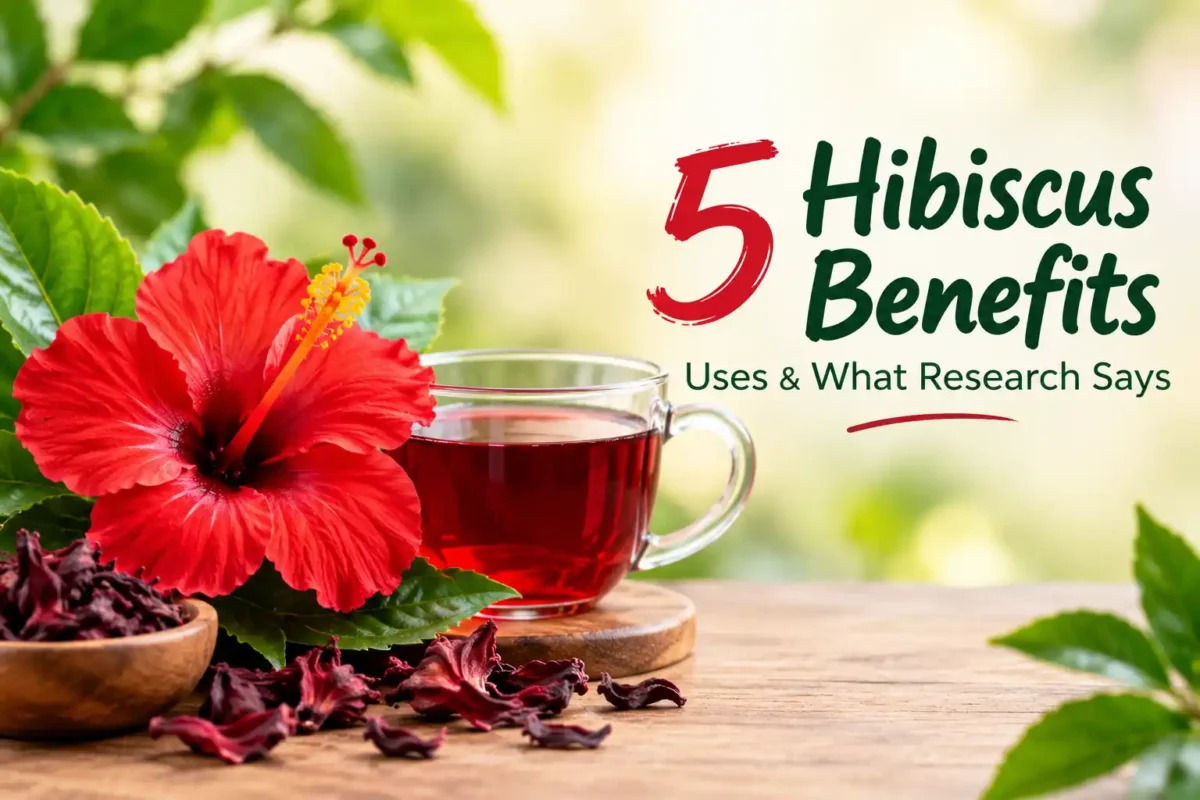
Hibiscus is widely known for its colorful flowers and refreshing herbal tea, but its traditional uses go beyond its appearance. Research on Hibiscus sabdariffa, commonly known as roselle, has explored its naturally occurring polyphenols and potential effects on blood pressure, blood lipids, blood sugar, and other aspects of health.
It is important to note that different hibiscus species are used for different purposes. Hibiscus × rosa-sinensis, commonly grown as an ornamental hibiscus, is a different botanical plant from Hibiscus sabdariffa, the species most frequently studied in clinical research on hibiscus tea. Kew recognizes Hibiscus × rosa-sinensis as a hybrid.
Let’s explore the potential hibiscus benefits, traditional uses, and what current research actually tells us.
5 Potential Hibiscus Benefits
1. May Support Healthy Blood Pressure
One of the better-studied potential benefits of Hibiscus sabdariffa is its relationship with blood pressure.
A systematic review and meta-analysis of randomized controlled trials found that H. sabdariffa supplementation was associated with reductions in both systolic and diastolic blood pressure compared with placebo. Another meta-analysis of five randomized trials also reported significant reductions in blood pressure.
These findings are promising, but hibiscus should not be described as a replacement for prescribed blood-pressure treatment. More research is needed to establish the most effective preparations, doses, and long-term effects.
2. Contains Naturally Occurring Antioxidant Compounds
Hibiscus calyces contain polyphenols and other plant compounds that have antioxidant activity in laboratory research. Clinical research has also investigated hibiscus beverages and extracts for their potential effects on oxidative stress and cardiometabolic health.
However, the term “antioxidant” should not automatically be interpreted as meaning that hibiscus prevents a particular disease. Human outcomes depend on the preparation, amount consumed, and individual factors.
3. May Support Cholesterol and Lipid Health
Research has examined whether Hibiscus sabdariffa can influence blood lipid levels. A meta-analysis involving nine trials and 503 participants reported reductions in total cholesterol and LDL cholesterol with H. sabdariffa supplementation, although the researchers noted that more high-quality clinical trials are needed.
Evidence is not completely consistent across studies. An earlier systematic review found no significant overall effect on serum lipids compared with placebo, black tea, or diet. Therefore, hibiscus is better described as a potential dietary support for lipid health, rather than a treatment for high cholesterol.
4. May Have Metabolic Health Potential
Hibiscus has also been studied for blood glucose and other metabolic markers.
A 2020 meta-analysis of randomized clinical trials reported a modest reduction in fasting blood glucose and LDL cholesterol with Hibiscus sabdariffa.
However, more recent research has produced mixed findings. For example, a 2025 randomized placebo-controlled trial involving 108 participants with abdominal obesity and mild metabolic syndrome found no significant improvement in most metabolic parameters compared with placebo, although LDL cholesterol decreased from baseline in the hibiscus group.
This shows why hibiscus should not be promoted as a treatment for diabetes or metabolic syndrome.
5. May Complement a Healthy Lifestyle
Hibiscus tea can be a flavorful, naturally tart beverage that may fit into a balanced diet, particularly when consumed without excessive added sugar.
Research has investigated hibiscus for weight management, but the evidence is mixed. A 2024 systematic review and meta-analysis of six randomized controlled trials found no significant clinical benefit for body weight, BMI, or waist circumference. Therefore, claims that hibiscus tea directly “burns belly fat” or causes weight loss should be avoided.
Hibiscus for Skin and Hair: What Does Research Say?
Hibiscus is frequently used in traditional and cosmetic preparations for hair and skin. Its plant compounds have generated interest in cosmetic research. However, the evidence is not strong enough to claim that hibiscus definitively stops hair fall, regrows hair, removes dandruff, or reverses skin aging.
For a herbal product article, it is more accurate to describe hibiscus as a traditional cosmetic ingredient rather than promise a specific hair or skin result.
Hibiscus and Liver Health
Hibiscus has also been investigated for liver-related outcomes, particularly Hibiscus sabdariffa. A small human clinical study involving 36 participants reported improvements in body weight, body fat, waist-to-hip ratio, and measures associated with liver steatosis after 12 weeks of H. sabdariffa extract.
However, this is not enough evidence to claim that hibiscus “detoxifies the liver” or treats fatty liver disease. More robust and larger clinical studies are required before making therapeutic claims.
Hibiscus and Cancer: What Should You Know?
Laboratory studies have investigated hibiscus extracts and individual compounds for potential anticancer activity. However, laboratory findings are not the same as evidence that hibiscus treats cancer in people.
There is currently not enough clinical evidence to recommend hibiscus as a cancer treatment or as a substitute for cancer therapy.
For this reason, claims such as “hibiscus kills cancer cells” or “hibiscus can supplement chemotherapy” should not be used in consumer health content without strong clinical evidence.
How Is Hibiscus Commonly Used?
Hibiscus is commonly prepared as:
- Herbal tea
- Cold or iced beverages
- Food and beverage ingredients
- Traditional herbal preparations
- Cosmetic and personal-care formulations
The preparation matters because research studies may use standardized extracts, capsules, teas, or other formulations that are not equivalent to one another.
Buy Hibiscus Flower Online: Buy Now
Conclusion:
The potential hibiscus benefits are an interesting area of nutritional and botanical research. Studies on Hibiscus sabdariffa suggest possible support for healthy blood pressure and certain metabolic markers, while evidence for weight management and other benefits remains mixed.
FAQs:
What are the main hibiscus benefits?
Research on Hibiscus sabdariffa has explored potential benefits related to blood pressure, blood lipids, blood glucose, antioxidant activity, and metabolic health. Evidence varies by outcome and preparation.
Is hibiscus good for weight loss?
Current evidence is mixed. A 2024 meta-analysis of randomized trials found no significant effect on body weight, BMI, or waist circumference.
Can hibiscus support blood pressure?
Research on Hibiscus sabdariffa suggests it may help reduce blood pressure in some people, but it should not replace prescribed treatment.
Is Hibiscus rosa-sinensis the same as Hibiscus sabdariffa?
No. They are different botanical plants. Hibiscus × rosa-sinensis is an ornamental hybrid, while Hibiscus sabdariffa is the roselle species frequently studied in hibiscus tea research.
Can hibiscus cure cancer?
No. Laboratory research does not establish that hibiscus can treat or cure cancer in humans.
Can hibiscus improve liver health?
Early research, including a small human study, has investigated Hibiscus sabdariffa and liver-related outcomes. However, there is not enough evidence to describe hibiscus as a treatment or liver detoxifier.
For more details on herbs and healing-related videos subscribe to our channels
https://www.youtube.com/@trustherb
https://www.instagram.com/trustherb.india/
