

Ayurvedic products and herbs, Poppy Seeds
What Is Khus Khus? Benefits, Uses & Nutritional Value
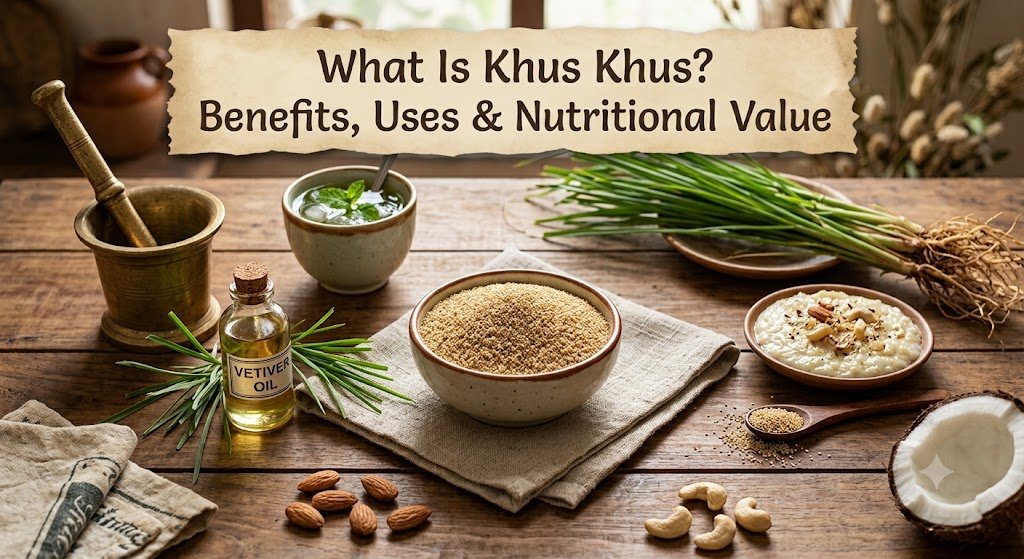
Aug
Find Khus Khus benefits, nutritional value, uses, & cooking ideas. Learn why these versatile poppy seeds are popular in everyday recipes.
Tiny, delicate, and widely used in Indian kitchens, Khus Khus is a popular ingredient known for its nutty flavor and culinary versatility. Also called poppy seeds, these small seeds have been used traditionally in different cuisines and cultural practices for generations.
From adding richness to curries and desserts to being used in traditional recipes, Khus Khus has a unique place in everyday cooking. Let’s explore what Khus Khus is, its nutritional value, traditional uses, and why it continues to be a popular kitchen ingredient.
Nutritional Value of Khus Khus
Khus Khus contains several naturally occurring nutrients and plant compounds. The seeds are particularly valued as a source of:
- Healthy fats
- Protein
- Dietary fiber
- Calcium
- Magnesium
- Phosphorus
- Iron
- Zinc
The exact nutritional composition can vary depending on the variety and serving size. Because they are usually consumed in relatively small quantities, Khus Khus is best viewed as a flavorful ingredient that can complement a balanced diet.
Khus Khus Benefits:
Khus Khus has been appreciated in traditional food and wellness practices for a long time. While it should not be considered a treatment for any health condition, its nutritional profile makes it an interesting addition to everyday meals.
1. A Source of Healthy Fats
Khus Khus naturally contains unsaturated fats. Including seeds as part of a varied and balanced diet can add nutritional diversity to meals.
2. Contains Plant-Based Protein
These tiny seeds provide some plant-based protein. Adding them to dishes such as gravies, desserts, breads, and homemade mixes can contribute to overall dietary variety.
3. Provides Dietary Fiber
Khus Khus contains dietary fiber, which is an important part of a balanced eating pattern. Using small amounts of seeds in everyday recipes can add texture and nutritional value.
4. Naturally Contains Minerals
Khus Khus provides minerals such as calcium, magnesium, phosphorus, and iron. These naturally occurring nutrients contribute to its overall nutritional profile.
5. Adds Flavor Without Strong Spices
One of the biggest culinary advantages of Khus Khus is its subtle nutty flavor. It can make recipes richer without overpowering the other ingredients.
Common Uses of Khus Khus
Khus Khus is incredibly versatile and can be used in both traditional and modern recipes.
Khus Khus Paste
Soaking and grinding Khus Khus creates a smooth paste that can be added to selected Indian gravies and sauces. It can provide thickness and a mild nutty flavor.
Indian Desserts
Khus Khus is used in several traditional sweets and desserts. It can be combined with ingredients such as milk, jaggery, coconut, nuts, or other seeds.
Breads and Baked Foods
The seeds can be sprinkled over breads, buns, and baked foods to provide a pleasant crunch and attractive appearance.
Curries and Gravies
Ground Khus Khus is traditionally incorporated into certain regional curries and gravies, where it helps create a creamy texture and distinctive flavor.
Breakfast and Homemade Recipes
Small quantities can also be incorporated into homemade seed mixes, porridges, or other recipes for added texture.
Buy Khus Khus Online: Buy Now
How to Use Khus Khus in Cooking
Before using Khus Khus in recipes, the seeds are often lightly roasted or soaked depending on the preparation. Soaking can make them easier to grind into a smooth paste.
For a simple culinary use, try adding a small amount of Khus Khus to a homemade curry paste or sprinkling it over bread before baking.
As with any ingredient, moderation and variety are useful when planning everyday meals.
Khus Khus vs Vetiver: Are They the Same?
No. Khus Khus and vetiver are different ingredients.
Khus Khus refers to poppy seeds obtained from Papaver somniferum, while vetiver is a fragrant grass known botanically as Chrysopogon zizanioides. The two are sometimes confused because the word “khus” is used in different Indian contexts.
Therefore, always check the product name and botanical identity when purchasing herbs or seeds.
Final Thoughts
Khus Khus is much more than a tiny decorative seed. Its mild nutty flavor, nutritional profile, and versatility have made it a valued ingredient in Indian and international cuisine.
Whether used in traditional gravies, desserts, breads, or homemade recipes, Khus Khus can bring both flavor and texture to everyday meals. Understanding its identity and traditional culinary uses can help you make the most of this unique ingredient.
FAQs:
What is Khus Khus?
Khus Khus is the common Indian name for poppy seeds, particularly white poppy seeds obtained from Papaver somniferum. They are widely used as a culinary ingredient.
Is Khus Khus the same as poppy seeds?
Yes. Khus Khus is commonly used in India to refer to poppy seeds, especially white poppy seeds.
What does Khus Khus taste like?
Khus Khus has a mild, slightly nutty flavor and is often used to add richness and texture to recipes.
How is Khus Khus used in cooking?
It can be used whole, lightly roasted, soaked, or ground into a paste for curries, gravies, desserts, breads, and other recipes.
What nutrients are found in Khus Khus?
Khus Khus naturally contains fats, protein, dietary fiber, and minerals including calcium, magnesium, phosphorus, and iron.
