

Ayurvedic products and herbs, Lata kasturi
5 Traditional Health Benefits of Lata Kasturi (Musk Mallow)
Feb
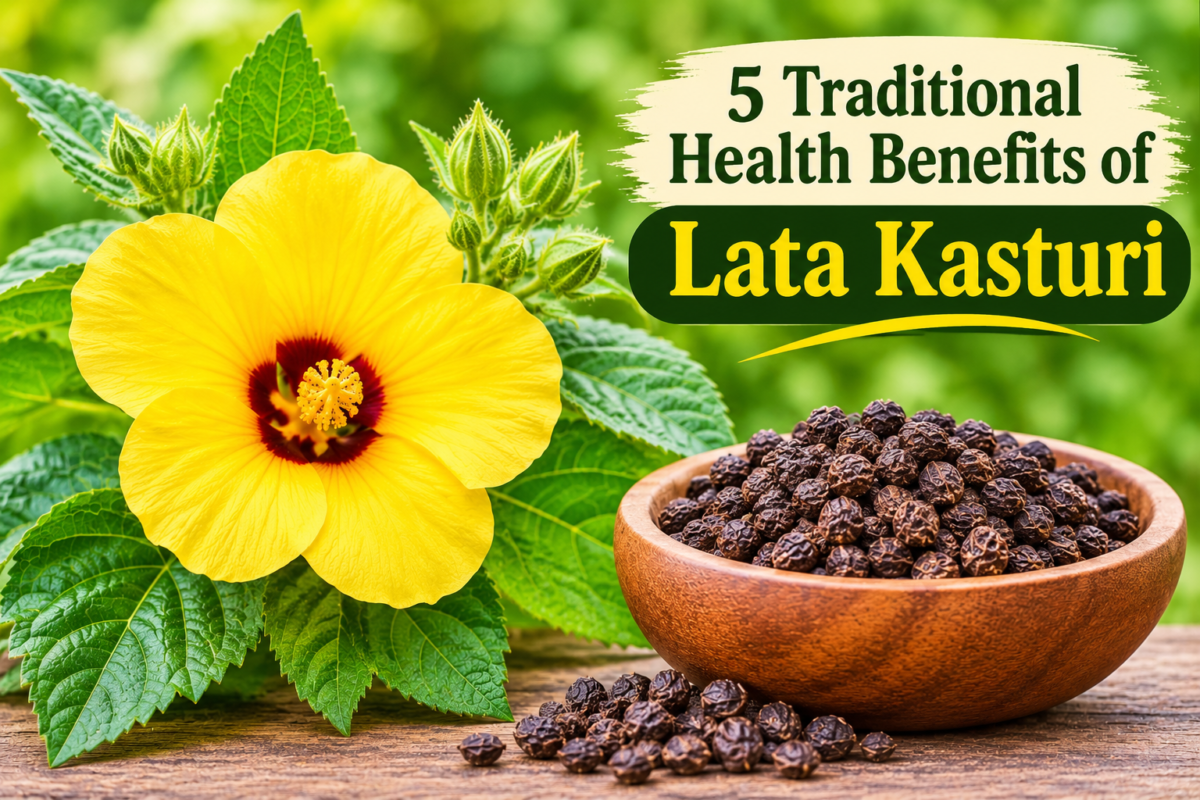
Lata Kasturi, also known as Musk Mallow, Muskdana, Kasturi Bhindi, and Ambrette, is an aromatic herb valued in traditional Ayurvedic practices. Its botanical name is Abelmoschus moschatus. The plant is recognised by its soft, hairy stem, large yellow flowers, and distinctive musk-scented seeds.
Native to tropical and subtropical Asia, Lata Kasturi is cultivated in India and several other countries. Different parts of the plant, including its leaves, roots, fruits, and seeds, have traditional uses. Its seeds are especially valued for their characteristic fragrance and are used in the perfumery industry.
Let’s explore five traditional uses and wellness associations of Lata Kasturi, along with some interesting facts about this aromatic herb.
Lata Kasturi in Ayurveda
In Ayurveda and traditional plant-use records, different parts of Lata Kasturi have been valued for their distinctive properties. The seeds are known for their musky aroma, while the leaves and other plant parts have also been used in traditional preparations.
The seeds contain fixed and volatile oils and naturally occurring plant compounds, including flavonoids. Their aromatic constituents make them particularly important in perfumery.
Traditional descriptions associate Lata Kasturi with digestive comfort, respiratory wellness, and general vitality. However, these traditional uses should not be considered scientifically proven treatments.
5 Traditional Health Benefits of Lata Kasturi
1. Traditionally Valued for Digestive Comfort
Lata Kasturi seeds appear in traditional herbal references associated with digestive wellness. Some traditional preparations have used the seeds in connection with occasional digestive discomfort.
However, reliable clinical evidence establishing their effectiveness for digestive disorders is limited. It is best to understand these applications as traditional practices rather than proven remedies.
2. Traditionally Used for Respiratory Wellness
Musk Mallow has also been mentioned in traditional herbal practices relating to respiratory comfort. Certain traditional references describe the use of its seeds in preparations associated with cough and throat discomfort.
These historical uses do not establish that Lata Kasturi can treat respiratory infections or other breathing conditions. Persistent cough or breathing difficulties require appropriate medical attention.
3. Associated With Traditional Nervine Uses
Traditional herbal references describe Lata Kasturi seeds as having nervine properties. In traditional terminology, nervine herbs are associated with supporting the nervous system and general well-being.
Although this is part of the plant’s traditional profile, there is insufficient clinical evidence to establish that Lata Kasturi improves neurological conditions or treats anxiety and other mental health concerns.
4. Traditionally Associated With General Vitality
In Ayurvedic descriptions, Lata Kasturi is traditionally associated with vitality and reproductive wellness. Its seeds have historically appeared in certain preparations connected with these traditional applications.
However, claims that the seeds improve sexual performance, fertility, or reproductive conditions have not been established through adequate human clinical research.
5. Valued for Its Aromatic and Natural Compounds
One of the most distinctive features of Lata Kasturi is its musk-like seed fragrance. The seeds contain volatile aromatic compounds and are used as a natural fragrance ingredient in perfumery.
Research has identified several volatile constituents in the seeds, while other studies have examined naturally occurring compounds such as myricetin. These findings make the plant interesting from a botanical and phytochemical perspective, although laboratory findings do not automatically establish health benefits in humans.
Other Uses of Lata Kasturi
Apart from its traditional herbal applications, Lata Kasturi has several interesting uses:
- Perfumery: Its musk-scented seeds are valued as a natural aromatic ingredient.
- Traditional food use: Young leaves and other edible parts are used as food in some regions.
- Gardening: Its attractive yellow flowers make it a useful ornamental plant.
- Traditional herbal preparations: Different plant parts have been documented in traditional plant-use records.
Important Precautions
Traditional use does not automatically establish safety or effectiveness. Avoid self-prescribing Lata Kasturi seeds, extracts, or other preparations for medical concerns. Concentrated extracts and essential oils should not be consumed or applied without suitable professional guidance.
Pregnant or breastfeeding individuals and people taking medication should consult a qualified healthcare professional before using herbal preparations.
FAQs:
1. What is Lata Kasturi called in English?
Lata Kasturi is commonly known as Musk Mallow or Ambrette. Its botanical name is Abelmoschus moschatus.
2. What is the botanical name of Lata Kasturi?
The accepted botanical name is Abelmoschus moschatus. It belongs to the Malvaceae family.
3. Which part of Lata Kasturi is known for its fragrance?
The seeds are especially known for their distinctive musky aroma and are used in the perfumery industry.
4. What are the traditional uses of Lata Kasturi?
Traditional references associate Lata Kasturi with digestive comfort, respiratory wellness, general vitality, and nervine applications. These uses are not established medical treatments.
5. Is Lata Kasturi used in Ayurveda?
Yes. Different parts of Lata Kasturi have been documented in traditional Ayurvedic and other herbal practices.
Conclusion:
Lata Kasturi is an interesting aromatic herb with a long history of traditional use. Its musk-scented seeds, naturally occurring plant compounds, and importance in perfumery make it a valuable plant to explore.
Although traditional references describe several wellness applications, more human research is needed to establish specific medicinal benefits. Understanding its botanical properties and traditional uses helps us appreciate Lata Kasturi responsibly.
Explore Lata Kasturi: Buy Musk Mallow (Lata Kasturi) Online
