

Ayurvedic products and herbs
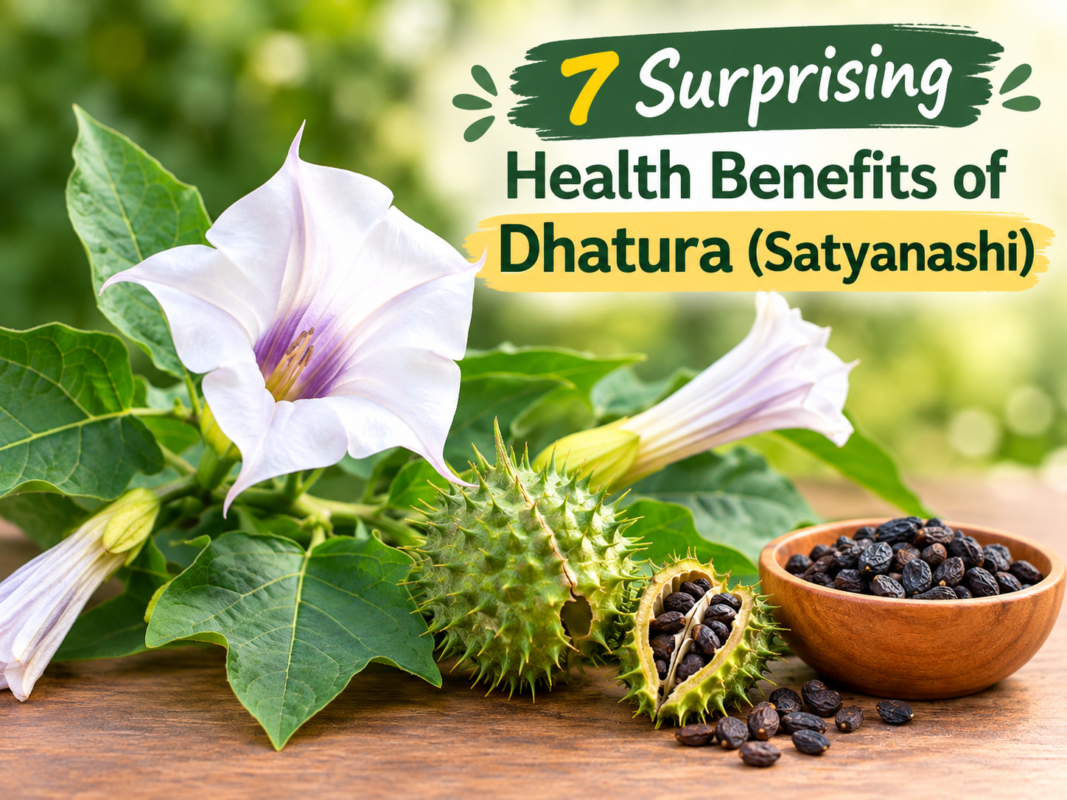
7 Surprising Health Benefits of Dhatura (Satyanashi)
Jan
Explore the traditional heritage of Dhatura and discover naturally sourced Ayurvedic products online for an authentic herbal experience.
Satyanashi Benefits, Uses & Botanical Name
Satyanashi, botanically known as Argemone mexicana L., is a distinctive prickly herb commonly found in open areas and along roadsides. It is also known by names such as Mexican Poppy, Prickly Poppy, and Brahmadandi. The plant belongs to the Papaveraceae family and has a long history of traditional use in different herbal practices.
Satyanashi has attracted interest because of its unique botanical characteristics and naturally occurring plant compounds. Different parts of the plant, including the root, leaves, flowers, stem, and seeds, have been mentioned in traditional herbal literature.
Today, Satyanashi continues to be valued as a traditional herb and is available in different herbal preparations.
What Is Satyanashi?
Satyanashi is the common name used for Argemone mexicana, an annual herb belonging to the Papaveraceae family. The plant is recognized by its prickly leaves and stems, along with its characteristic yellow flowers.
The herb is traditionally known by several regional names, which can sometimes make identification confusing. Knowing its botanical name, Argemone mexicana, can help distinguish it from similarly named plants.
Satyanashi Botanical Name
The botanical name of Satyanashi is Argemone mexicana L.
Here are its basic botanical details:
- Botanical name: Argemone mexicana L.
- Family: Papaveraceae
- Genus: Argemone
- Common name: Mexican Poppy
- Other name: Prickly Poppy
- Traditional name: Brahmadandi
Argemone mexicana is recognized as an accepted species in botanical databases.
Top Satyanashi Benefits
The term Satyanashi benefits generally refers to the traditional value and properties associated with this herb. Modern research has also investigated different extracts of Argemone mexicana for their naturally occurring compounds and biological activities.
Here are some notable areas associated with Satyanashi:
1. Rich in Naturally Occurring Plant Compounds
Satyanashi contains various naturally occurring phytochemicals, including alkaloids, flavonoids, phenolic compounds, terpenoids, and other plant constituents.
These compounds are one reason Argemone mexicana has been studied in botanical and phytochemical research.
2. Traditionally Valued in Herbal Practices
Different parts of Satyanashi have been used traditionally in various regions. Historical herbal knowledge describes the use of the root, leaves, seeds, flowers, stem, and other plant materials.
Its traditional importance contributes to the continued interest in Satyanashi as an herbal plant.
3. Studied for Antioxidant Properties
Research has investigated extracts of Argemone mexicana for antioxidant activity. These studies help researchers understand the naturally occurring compounds present in the plant.
However, laboratory findings should not automatically be interpreted as proven effects from consuming Satyanashi.
4. Studied for Antimicrobial Activity
Certain extracts of Argemone mexicana have also been investigated for antimicrobial activity under laboratory conditions.
This research adds to the scientific interest surrounding Satyanashi, although laboratory observations should not be presented as proof of a specific health outcome in humans.
5. Traditionally Used in Different Herbal Preparations
Various parts of Satyanashi have been incorporated into traditional herbal preparations. The preparation, plant part, and method of use can vary according to regional practices and traditional systems.
For this reason, Satyanashi is an interesting example of traditional plant knowledge and botanical research coming together.
Buy Satyanashi Online: Buy Now
Satyanashi Uses in Traditional Herbal Practices
Satyanashi has been traditionally associated with a variety of herbal applications. The root, leaves, flowers, seeds, stem, and latex are among the plant parts discussed in traditional references.
However, traditional use can differ considerably depending on the region and herbal tradition. Therefore, traditional references should be understood as historical and cultural information rather than as established medical recommendations.
Satyanashi Seeds
Satyanashi seeds are an important part of the plant and are available in herbal preparations such as seed powder.
When purchasing Satyanashi seed powder, look for a product that clearly identifies the botanical name and provides appropriate product information.
For those interested in exploring this traditional herb, Satyanashi seed powder can be considered as part of an authentic herbal experience.
Why Is Satyanashi Also Called Mexican Poppy?
Satyanashi is commonly associated with the name Mexican Poppy because its accepted botanical name is Argemone mexicana. The plant is characterized by prickly foliage and yellow flowers, making it relatively distinctive among plants commonly found in open areas.
Other regional names may also be used for the same plant, which is why botanical identification is useful when researching Satyanashi.
Satyanashi Plant Identification
Some commonly recognized characteristics of the Satyanashi plant include:
- Prickly leaves
- Spiny stems
- Yellow flowers
- Seed-producing capsules
- Characteristic herbal appearance
Because several wild plants can look similar, botanical identification is important before using any plant material.
Satyanashi: Traditional Knowledge Meets Modern Research
Satyanashi has been part of traditional herbal knowledge for generations, while modern researchers have examined its phytochemical composition and biological activities.
This combination makes Argemone mexicana an interesting botanical subject. However, research findings should be interpreted according to the type of study involved. Results from laboratory or preliminary studies do not necessarily establish the same effects in humans.
FAQs:
What is Satyanashi?
Satyanashi is the common name for Argemone mexicana L., a prickly herb belonging to the Papaveraceae family. It is also known as Mexican Poppy, Prickly Poppy, and Brahmadandi.
What is the botanical name of Satyanashi?
The botanical name of Satyanashi is Argemone mexicana L.
What are the common names of Satyanashi?
Satyanashi is also known as Mexican Poppy, Prickly Poppy, and Brahmadandi. Regional names can vary.
Which family does Satyanashi belong to?
Satyanashi belongs to the Papaveraceae family, commonly known as the poppy family.
Which parts of Satyanashi are traditionally used?
Traditional references discuss several parts of the plant, including the root, leaves, flowers, stem, seeds, and latex. Traditional applications can vary by region and herbal practice.
What are Satyanashi benefits?
Satyanashi benefits generally refer to its traditional herbal value and the properties associated with its naturally occurring plant compounds. Research has investigated Argemone mexicana for activities such as antioxidant and antimicrobial activity, primarily in experimental settings.
Is Satyanashi the same as Mexican Poppy?
Yes. Mexican Poppy is a commonly used English name for Argemone mexicana, the botanical species commonly referred to as Satyanashi.
What is Satyanashi seed powder?
Satyanashi seed powder is a powdered herbal preparation made from Satyanashi seeds. Product specifications and recommended use can vary between preparations.
Final Thoughts:
Satyanashi, or Argemone mexicana L., is a distinctive traditional herb with a long history of use in different herbal practices. Also known as Mexican Poppy, Prickly Poppy, and Brahmadandi, the plant has attracted both traditional and scientific interest.
The Satyanashi benefits commonly discussed today are best understood in the context of traditional herbal knowledge and botanical research. Its naturally occurring plant compounds and different plant parts make it an interesting herb for those exploring traditional botanicals.
For an authentic herbal experience, choose clearly identified Satyanashi products and follow the usage information provided with the specific preparation.
