

Uncategorized
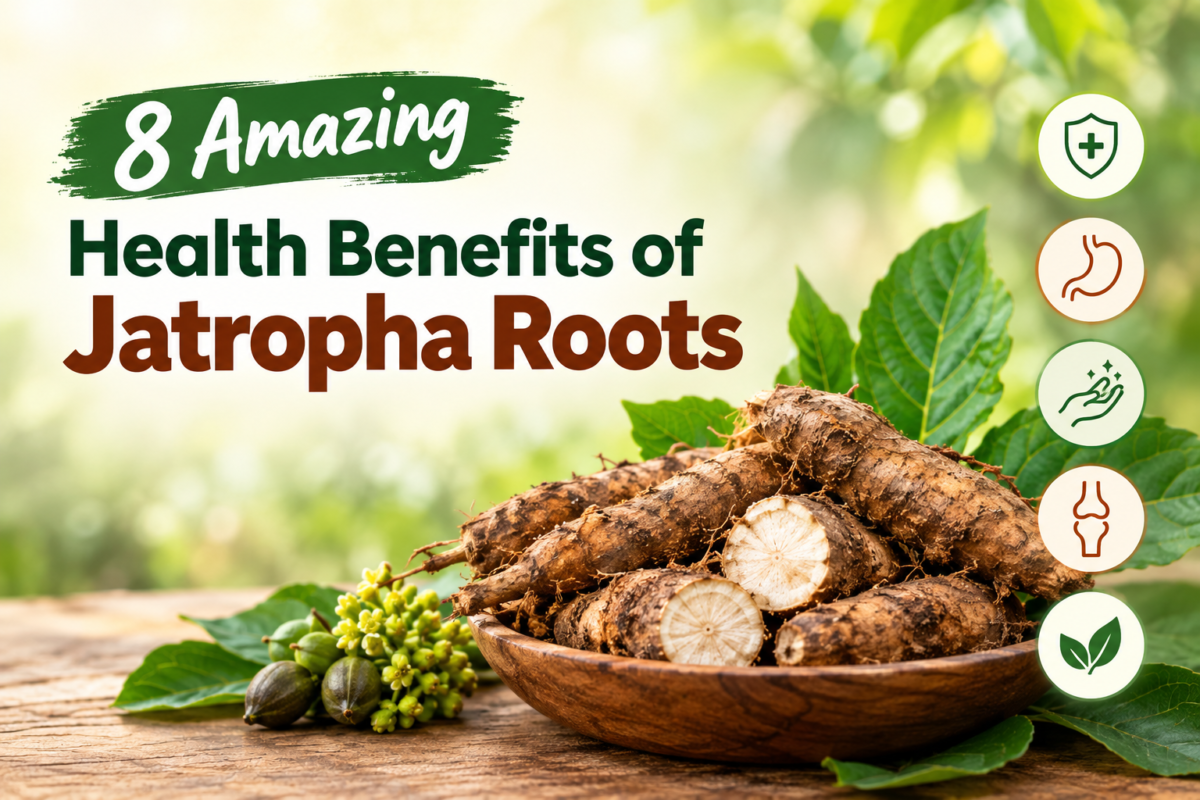
8 Amazing Health Benefits of Jatropha Roots
Mar
Explore Jatropha root benefits, traditional uses, research findings, botanical identity, and important safety considerations backed by scientific evidence.
Jatropha root has been used in traditional herbal practices in different parts of the world, while modern research has explored the plant for its naturally occurring compounds and biological activity. Among the different parts of Jatropha curcas, the root has received scientific attention for its phytochemical composition and potential anti-inflammatory activity.
However, there is an important point to understand before discussing Jatropha root benefits: Jatropha curcas should not automatically be considered the same plant as Ratanjot or Alkanet. Common herbal names can refer to different botanical species, making the scientific name essential when identifying a product or herbal ingredient.
So, what does research actually say about Jatropha root?
Let’s explore its traditional uses, potential properties, research findings, and important safety considerations.
8 Potential Benefits and Traditional Uses of Jatropha Root
1. Jatropha Root Has Been Traditionally Used in Herbal Practices
Jatropha has a long history of traditional use in several regions. Different plant parts have been used in local herbal practices for purposes associated with inflammation, skin concerns, digestive complaints, and other traditional applications.
These historical uses provide an interesting starting point for scientific research, but traditional use alone does not establish clinical effectiveness.
2. Jatropha Root Is Being Studied for Anti-Inflammatory Activity
One of the more interesting areas of Jatropha root research is its potential anti-inflammatory activity.
A laboratory study investigated extracts from different parts of Jatropha curcas using cultured RAW 264.7 macrophage cells. The root extract demonstrated notable activity in the experimental model, and researchers identified several compounds associated with the observed activity.
However, the study was conducted in vitro, meaning it used laboratory cells rather than human participants. Therefore, these findings do not establish that consuming Jatropha root produces an anti-inflammatory effect in people.
3. Jatropha Root Contains Bioactive Plant Compounds
Jatropha contains a diverse range of naturally occurring plant compounds. Research has identified phytochemicals from different Jatropha species, including diterpenes, alkaloids, flavonoids, phenolic compounds, and other constituents. These compounds are one reason Jatropha continues to attract interest in phytochemical and pharmacological research.
The composition of an extract can vary depending on the plant part, extraction solvent, concentration, and processing method.
4. Jatropha Is Being Investigated for Antioxidant Properties
Some Jatropha extracts have demonstrated antioxidant-related activity in experimental research.
Plant compounds with antioxidant properties are widely studied because they can interact with oxidative processes in laboratory models. However, laboratory antioxidant activity should not automatically be translated into a specific health benefit in humans.
For this reason, Jatropha root is better described as a subject of antioxidant research rather than a proven antioxidant supplement.
5. Traditional Uses Include Skin-Related Applications
Various Jatropha species have been used traditionally in preparations associated with skin and wound care. Scientific research has also investigated different Jatropha extracts for antimicrobial, anti-inflammatory, and other biological properties.
However, traditional topical use does not mean Jatropha root has been clinically proven to heal wounds, burns, rashes, or other skin conditions.
The popular claim that Jatropha root makes wounds heal “40% faster” should not be used without a reliable human clinical study supporting that exact figure.
6. Jatropha Has Been Studied for Antimicrobial Activity
Research into the Jatropha genus has reported antimicrobial activity from certain extracts and isolated compounds. This area of research is scientifically interesting, but laboratory antimicrobial activity is different from demonstrating that a plant preparation can prevent or treat an infection in humans.
Therefore, Jatropha should not be promoted as a replacement for appropriate medical care or antimicrobial treatment.
7. Jatropha Root Is an Area of Phytochemical Research
Scientists continue to investigate Jatropha roots to understand which compounds may contribute to their biological activity.
In one study, researchers separated compounds from Jatropha curcas root extracts and investigated their anti-inflammatory activity in laboratory cells. Some isolated fractions showed activity without the cytotoxicity observed in the crude extract, highlighting how strongly biological effects can depend on extraction and purification.
This is an important distinction: a laboratory extract is not equivalent to raw Jatropha root or a commercially prepared herbal product.
8. Jatropha Continues to Attract Scientific Interest
Jatropha is being studied because of the wide range of compounds found throughout the plant and the biological activities reported for various extracts.
Reviews of Jatropha species have described research into anti-inflammatory, antimicrobial, antioxidant, and other properties. At the same time, researchers emphasize the need for further investigation into both potential applications and toxicity.
This makes Jatropha an interesting botanical subject, but it also means that health claims should remain evidence-based.
Jatropha Root Safety: An Important Consideration
Jatropha deserves particular caution because toxicity has been documented in different parts of the plant.
A detailed review of Jatropha toxicity reported toxic effects associated with extracts from the roots, seeds, fruits, latex, bark, and leaves.
Research has also focused extensively on toxic compounds found in Jatropha, particularly phorbol esters associated with the seeds and seed-derived products. More recent toxicological research continues to examine these compounds and their effects.
Therefore, Jatropha root should not be casually presented as an edible wellness herb or general-purpose detox ingredient.
The safety of a preparation can depend on the plant species, plant part, extraction process, concentration, processing, and intended use.
Is Jatropha Root the Same as Ratanjot or Alkanet?
This is an important distinction for anyone buying herbal products.
Jatropha curcas and Alkanna tinctoria are different botanical species.
Alkanna tinctoria is associated with the name Alkanet, while “Ratanjot” can be used inconsistently in different medicinal and herbal naming systems. Kew’s Medicinal Plant Names Services lists multiple scientific species associated with the common name Ratanjot.
For this reason, the scientific name should always be checked before purchasing or using a botanical product.
FAQs:
What is Jatropha root?
Jatropha root is the root of a Jatropha plant, with Jatropha curcas being one well-known species. It has a history of traditional use and has been investigated for its phytochemical and biological properties.
What are the potential benefits of Jatropha root?
Research has investigated Jatropha root for properties including anti-inflammatory activity and its naturally occurring phytochemicals. However, much of the available evidence comes from laboratory or experimental studies rather than human clinical trials.
Is Jatropha root the same as Alkanet?
No. Jatropha curcas and Alkanna tinctoria are different botanical species. Common names such as Ratanjot can also be applied inconsistently, so checking the scientific name is important.
Can Jatropha root be consumed?
Jatropha should not be treated as an ordinary edible herb. Toxicity has been documented in several parts of Jatropha plants, and the safety of a particular preparation depends on its botanical identity, plant part, processing, and formulation.
Does Jatropha root have anti-inflammatory properties?
Laboratory research has found anti-inflammatory activity in Jatropha curcas root extracts. However, these findings come from experimental models and do not establish a proven anti-inflammatory effect in humans.
Is Jatropha root proven to heal wounds?
No. Jatropha has traditional applications associated with wounds and skin care, but this should not be presented as proof of clinically established wound-healing effects.
Buy Jatropha Roots Online: Buy Now
Conclusion:
Jatropha root benefits are mainly linked to its traditional uses and promising early research. While studies have explored its plant compounds and biological properties, more human research is needed. Always verify the botanical name and consider safety before using Jatropha root.
