

Ayurvedic products and herbs
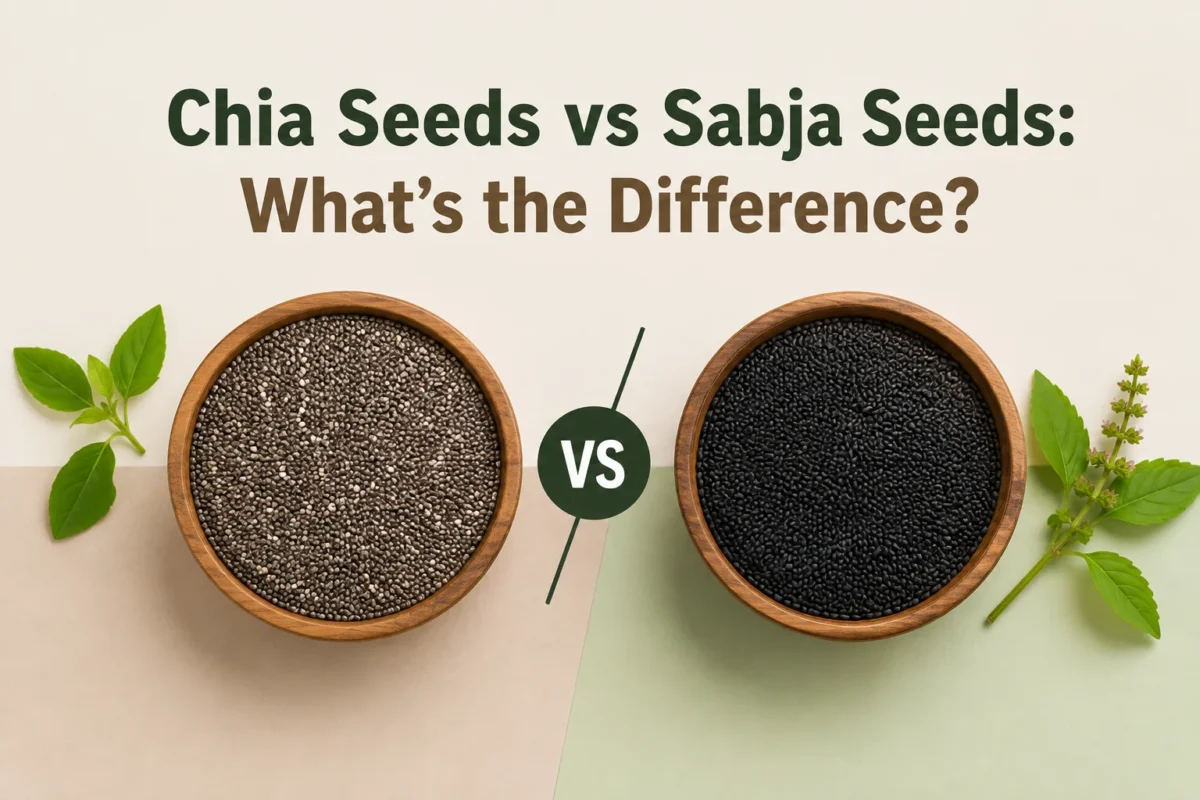
Chia Seeds vs Sabja Seeds: What’s the Difference?
Aug
Chia seeds vs sabja seeds: discover their key differences, uses, soaking time, texture, nutrition, and how to choose the right seeds for your recipes.
Chia seeds and sabja seeds often look almost identical at first glance. Both are tiny seeds that develop a gel-like coating when soaked, and both have become popular additions to drinks, breakfast bowls, desserts, and everyday recipes.
But they are not the same seed.
Chia seeds come from Salvia hispanica, while sabja seeds come from Ocimum basilicum, the sweet basil plant. They also differ in appearance, soaking time, texture, nutritional composition, and traditional culinary uses.
If you have ever wondered whether chia and sabja can be used interchangeably, this simple comparison will help you understand what makes each one different.
Chia Seeds vs Sabja Seeds at a Glance
| Feature | Chia Seeds | Sabja Seeds |
|---|---|---|
| Botanical name | Salvia hispanica | Ocimum basilicum |
| Also known as | Chia | Basil seeds, Tukmaria, Falooda seeds |
| Plant family | Lamiaceae | Lamiaceae |
| Appearance | Small, oval, often black, grey, or speckled | Small, dark black and more uniform |
| Soaking time | Usually takes longer to fully hydrate | Swells relatively quickly |
| Texture after soaking | Soft, gel-like | Gel-like outer layer with a slightly crunchy center |
| Common uses | Smoothies, puddings, oats, yogurt | Falooda, sherbets, lemon drinks and other beverages |
| Taste | Mild and neutral | Mild, slightly herbal |
Although both belong to the mint family, they come from different plant species and have distinct characteristics.
What Are Chia Seeds?
Chia seeds are the edible seeds of Salvia hispanica, a flowering plant native to parts of Mexico and Central America.
They are usually small and oval-shaped and may appear black, grey, white, or speckled. When soaked in water or another liquid, chia seeds absorb moisture and develop a soft, gel-like coating.
Because of their mild flavour, chia seeds can easily be incorporated into different foods without significantly changing their taste.
Common ways to use chia seeds include:
- Overnight oats
- Smoothies
- Yogurt bowls
- Chia pudding
- Homemade drinks
- Baked recipes
- Fruit-based preparations
Their ability to absorb liquid also makes them popular in recipes where a thicker texture is desired.
What Are Sabja Seeds?
Sabja seeds are the seeds of Ocimum basilicum, commonly known as sweet basil. They are also called basil seeds, tukmaria, or falooda seeds.
Unlike chia seeds, sabja seeds are commonly associated with traditional Indian beverages and desserts. They have long been used in drinks such as falooda, sherbets and refreshing summer beverages.
When soaked, sabja seeds develop a translucent, jelly-like coating around the dark seed. They generally hydrate faster than chia seeds, making them convenient when preparing a drink quickly.
Chia Seeds vs Sabja Seeds: Key Differences
1. They Come From Different Plants
This is the most important difference.
Chia seeds come from Salvia hispanica, whereas sabja seeds come from Ocimum basilicum. They may look similar after soaking, but botanically they are completely different seeds.
2. Their Appearance Is Different
Dry chia seeds can have a mixture of black, grey and white colouring and generally have a speckled appearance.
Sabja seeds are usually uniformly black and have a slightly different shape and surface.
Once soaked, however, the difference becomes more noticeable because both develop a gel-like outer coating.
3. Sabja Seeds Usually Soak Faster
One of the easiest practical differences to remember is soaking time.
Sabja seeds can swell and develop their characteristic coating relatively quickly, often within several minutes. Chia seeds generally take longer to hydrate fully, with many preparations allowing around 15–30 minutes or longer depending on the recipe.
For this reason, sabja can be particularly convenient when preparing a quick summer drink.
4. The Texture Is Not Exactly the Same
Both seeds develop a gel-like coating after soaking, but the eating experience differs.
Soaked chia tends to become softer and more uniformly gel-like. Sabja develops a slippery outer coating while retaining a small seed-like centre, creating a slightly different texture.
This difference matters when choosing seeds for particular recipes.
5. Their Nutritional Profiles Differ
Both seeds provide dietary fibre and various nutrients, but their nutritional profiles are not identical.
Chia seeds are particularly known for their combination of fibre, plant protein and alpha-linolenic acid (ALA), a plant-based omega-3 fatty acid. They also provide minerals such as calcium and magnesium.
Sabja seeds also provide fibre and contain minerals and plant compounds, but their nutritional composition differs from chia.
Therefore, it is more accurate to think of them as two different nutritious seeds, rather than assuming one is simply a replacement for the other.
Which Is Better: Chia or Sabja?
There is no universal winner.
The better choice depends on how you want to use the seeds.
Choose Chia Seeds When:
- You want a neutral-tasting seed for breakfast recipes.
- You enjoy overnight oats or chia pudding.
- You want to add seeds to smoothies or yogurt.
- You are looking for a source of plant-based ALA omega-3.
- You prefer a soft gel-like texture in recipes.
Buy Chia Seeds Online: Buy Now
Choose Sabja Seeds When:
- You want a traditional ingredient for Indian drinks.
- You are preparing falooda or sherbet.
- You want seeds that hydrate relatively quickly.
- You enjoy the slightly crunchy texture of soaked basil seeds.
- You want an easy addition to refreshing summer beverages.
Both can have a place in a varied diet, and choosing one does not necessarily mean you need to completely avoid the other.
Can You Use Chia Seeds Instead of Sabja Seeds?
Sometimes, but the result may not be exactly the same.
Both seeds absorb liquid and develop a gel-like coating, so they can appear interchangeable in certain drinks and recipes. However, their soaking time, texture and flavour are different.
For example, if a traditional falooda recipe specifically calls for sabja seeds, replacing them with chia will change the texture and overall character of the drink.
Similarly, chia is often preferred in recipes such as overnight oats and chia pudding because of its mild taste and thickening ability.
So, while substitutions are possible in some recipes, chia and sabja should not be treated as identical ingredients.
How to Soak Chia Seeds
A simple method is:
- Add chia seeds to water, milk or another liquid.
- Stir well to prevent the seeds from clumping.
- Allow them to hydrate until they develop a gel-like texture.
- Stir again before adding them to your recipe.
Chia can then be added to smoothies, yogurt, oats, puddings or other preparations.
How to Soak Sabja Seeds
Sabja seeds are also simple to prepare:
- Place the required amount of sabja seeds in a bowl.
- Add enough water to cover them.
- Allow them to soak for several minutes.
- Once the outer coating has developed, drain excess water if required.
- Add the soaked seeds to your preferred drink or recipe.
They are particularly popular in falooda, sherbets, lemon-based drinks and other refreshing beverages.
Chia Seeds vs Sabja Seeds for Everyday Use
If your priority is breakfast foods and versatile recipes, chia seeds are an easy choice. Their mild flavour works well with oats, smoothies, yogurt and puddings.
If your priority is traditional Indian drinks and quick preparation, sabja seeds are a practical option. Their rapid swelling and distinctive texture make them especially popular in beverages.
You can also use both at different times. There is no need to treat chia and sabja as competing ingredients.
FAQs:
Are chia seeds and sabja seeds the same?
No. Chia seeds come from Salvia hispanica, while sabja seeds come from Ocimum basilicum. They belong to the same plant family but are different species.
Is sabja another name for chia seeds?
No. Sabja is another name for basil seeds, also commonly called tukmaria or falooda seeds. Chia is a different seed from a different plant.
Which seeds swell faster, chia or sabja?
Sabja seeds generally swell faster than chia seeds. Sabja can develop its gel-like coating within several minutes, while chia typically takes longer to hydrate fully.
Can I use chia seeds instead of sabja seeds?
You can substitute them in some recipes, but the texture and soaking time will be different. For traditional preparations such as falooda, sabja provides the characteristic texture.
Can I eat chia and sabja seeds together?
They can both be included in a varied diet, but preparation matters. Since both seeds absorb liquid and swell, use them appropriately in hydrated preparations and follow the serving instructions for the product you purchase.
Which is better for summer drinks?
Sabja seeds are traditionally popular in Indian summer drinks because they hydrate quickly and are commonly used in beverages such as falooda and sherbets.
The Bottom Line
Chia seeds and sabja seeds may look similar, but they are different seeds with different origins, textures, soaking times and culinary uses.
Chia seeds are versatile and work especially well in smoothies, overnight oats, puddings and breakfast recipes. Sabja seeds are closely associated with Indian beverages such as falooda and sherbets and are known for their quick-soaking gel texture.
Instead of asking which one is universally better, consider what you are preparing and which characteristics you prefer. Both can be useful additions to everyday recipes when used appropriately.
