

Ayurvedic products and herbs
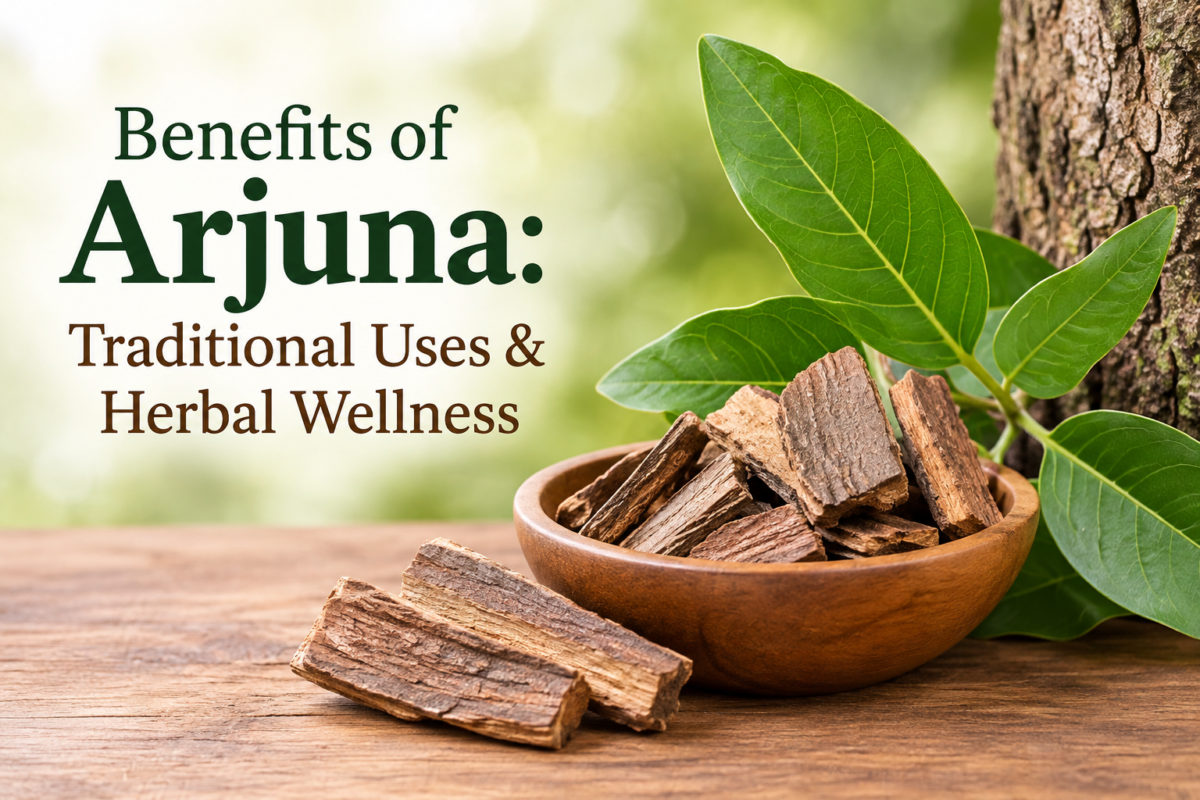
Benefits of Arjuna: Traditional Uses, Bark, Powder & More
Sep
For generations, one Indian tree has held a special place in traditional herbal practices — and its bark is the reason why. Known as Arjuna, this traditional herb continues to attract attention among people exploring natural and Ayurvedic wellness.
But what makes Arjuna so valued, and how is its bark traditionally used?
Arjuna (Terminalia arjuna) is best known for its traditional association with heart-focused wellness. Its bark is commonly prepared as a powder or decoction and is also found in traditional herbal formulations.
Let’s explore the traditional benefits of Arjuna, how it is commonly used, and what to look for when choosing Arjuna products.
Contents
Traditional Benefits of Arjuna
Arjuna has a long history in Ayurvedic herbal practices, with its bark being the primary part traditionally used.
1. Traditionally Associated With Heart-Focused Wellness
One of the best-known traditional uses of Arjuna is its association with heart-focused Ayurvedic wellness practices.
Its bark has traditionally been included in herbal preparations used within these practices. This refers to its traditional role and should not be taken as a claim that Arjuna treats or prevents a medical condition.
2. Used in Traditional Herbal Preparations
Arjuna bark can be prepared in different ways, depending on the traditional practice.
It may be used as a powder, prepared as a decoction, or combined with other botanical ingredients in traditional herbal formulations.
3. Contains Naturally Occurring Plant Compounds
Arjuna bark naturally contains various plant compounds, including tannins and flavonoids.
These constituents have attracted scientific interest, although research findings can vary depending on the preparation and study. Research interest should not automatically be interpreted as proof of a specific benefit in humans.
How Is Arjuna Commonly Used?
The bark of Arjuna is available in several traditional forms.
Arjuna Powder
Arjuna powder is made from dried and processed bark. It is commonly available as a standalone herbal ingredient and may be used in traditional preparations.
Arjuna Decoction
Arjuna bark has traditionally been prepared as a decoction using water. This is one of the traditional preparation methods used for certain barks and woody herbs.
Herbal Formulations
Arjuna may also be included in Ayurvedic and traditional herbal formulations alongside other botanical ingredients.
If you are using a commercially prepared product, follow the directions provided on its packaging.
Arjuna Bark: What Makes It Popular?
The bark is the part most closely associated with Arjuna’s traditional use. Its long history in Ayurveda has helped maintain interest in Arjuna among people exploring traditional Indian herbs.
Today, Arjuna bark and Arjuna powder are commonly found in herbal-product collections, making the plant accessible in different forms.
What to Look for When Buying Arjuna
Choosing a clearly identified herbal product can make it easier to understand what you are purchasing.
When buying Arjuna bark or powder, check for:
- Botanical name: Terminalia arjuna
- Clear ingredient information
- Properly cleaned and processed plant material
- Suitable packaging
- Clear storage instructions
Store herbal products according to the instructions provided and protect them from moisture and direct sunlight.
At TrustHerb, Arjuna can be explored alongside other traditionally valued herbs and natural botanical products.
Buy Arjuna Bark Online: Buy Now
FAQs:
What are the benefits of Arjuna?
Arjuna has traditionally been valued in Ayurvedic practices, particularly for heart-focused wellness routines. Its bark is also used in different traditional herbal preparations.
What is Arjuna bark used for?
Arjuna bark is traditionally used to prepare powders, decoctions, and herbal formulations.
Is Arjuna the same as Terminalia arjuna?
Yes. Terminalia arjuna is the botanical name of the plant commonly known as Arjuna or Arjun.
Which part of Arjuna is commonly used?
The bark is the part most commonly associated with traditional herbal use.
Is Arjuna available as a powder?
Yes. Arjuna powder is made from dried Arjuna bark and is commonly available as a traditional herbal ingredient.
How is Arjuna traditionally prepared?
Arjuna bark may be prepared as a powder or decoction and can also be included in traditional herbal formulations.
Final Thoughts
Arjuna (Terminalia arjuna) is a traditionally valued Indian herb with a long history in Ayurveda. Its bark remains the most commonly used part and is available as powder, decoction, and in herbal formulations.
For anyone exploring traditional botanicals, Arjuna offers an interesting look at India’s longstanding herbal traditions. Choose clearly identified and responsibly processed products and follow the preparation and storage information provided with them.
