

Ayurvedic products and herbs
Bakain Tree: Benefits, Uses, Identification & Traditional Uses
Aug
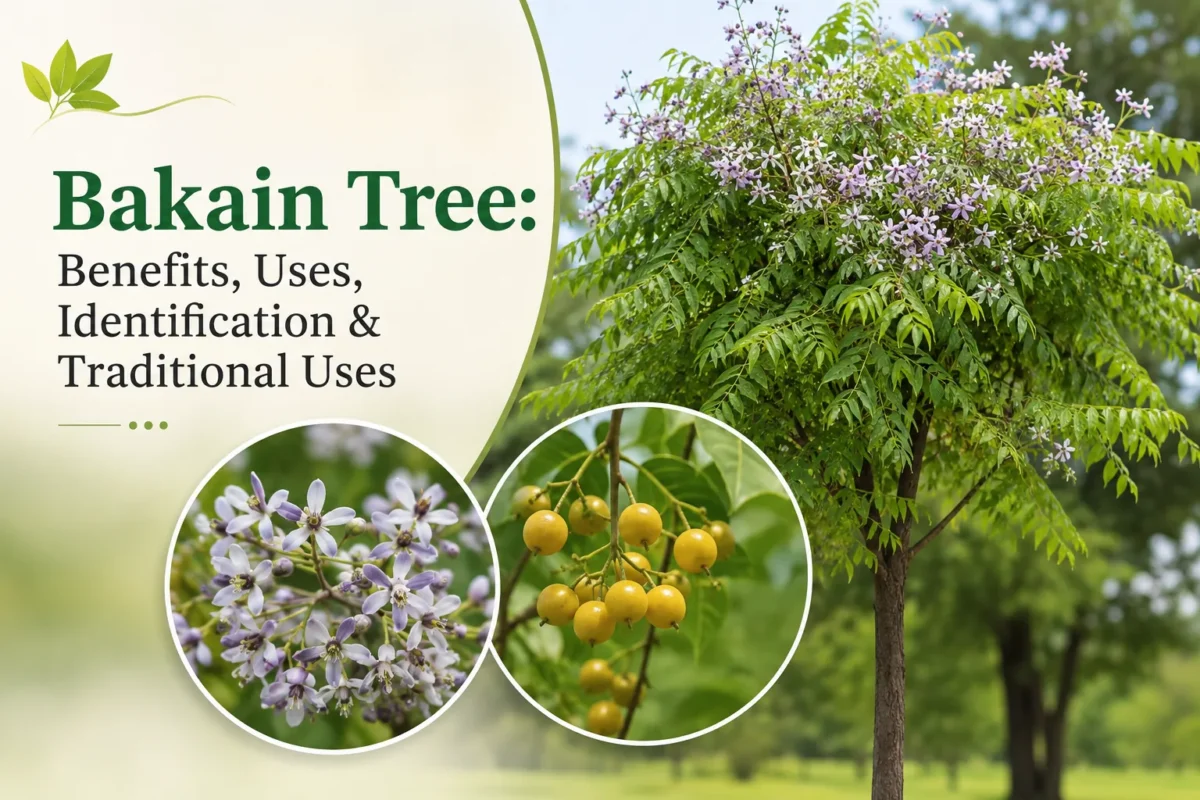
Bakain is a tree you may have seen without knowing its name. Its fragrant flowers, compound leaves, and small yellowish fruits make it distinctive, but its traditional uses are what make it particularly interesting.
Known by names such as Bakayan, Persian Lilac, Chinaberry, and Pride of India, Bakain is commonly identified as Melia azedarach. The tree has been valued in different regions for its shade, wood, ornamental qualities, and traditional household uses.
If you’re looking for information about the Bakain tree, this guide covers the basics in one place—from its identification and common names to its traditional uses and important points to know.
What Are the Benefits and Uses of Bakain Tree?
Bakain has a long history of practical and traditional uses. Here are some of the most notable ones.
1. Provides Natural Shade
Bakain develops a spreading canopy that can provide shade in open areas. It has traditionally been planted around gardens, roadsides, and other spaces where shade and greenery are useful. Its broad growth also gives the tree an attractive appearance when planted in suitable surroundings.
2. Adds Beauty With Its Flowers
The flowers are one of Bakain’s most recognizable features. The tree produces clusters of small, fragrant flowers that are generally pale lilac or whitish. When in bloom, they give the tree a pleasant ornamental appearance.This is one reason Bakain has also been grown as an ornamental tree.
3. Traditionally Valued for Its Wood
Bakain has traditionally been used as a source of wood.
Depending on the region and local practices, the wood has been used for poles, fuel, and other practical purposes. This adds to the usefulness of the tree beyond its appearance.
4. Used in Traditional Household Practices
Plants once played an important role in everyday household practices, and Bakain is one example. Dried leaves and fruits have traditionally been associated with protecting stored clothing and materials from insects. This is a historical use and reflects the practical knowledge surrounding the plant.
5. Used for Beads and Decorative Items
Bakain fruits contain hard stones that have traditionally been used to make beads and other decorative items. This lesser-known use shows how different parts of the tree have been put to use rather than simply discarded.
6. Its Fruits Help With Identification
The fruits are useful when identifying a Bakain tree. They are small, round, and generally become yellowish as they mature. Along with the compound leaves and fragrant flowers, they provide useful visual clues when distinguishing Bakain from other trees.
However, Bakain fruits should not be eaten. The plant is known to contain toxic compounds.
7. Has a Place in Traditional Plant Knowledge
Bakain has been associated with traditional plant practices in different regions for generations. Its wood, leaves, fruits, flowers, and overall growth have all contributed to the ways communities have traditionally used and understood the tree.
For those interested in traditional Indian plants, Bakain offers an interesting example of how one tree can have several practical and cultural associations.
Buy Bakain Tree Online: Buy Now
Final Thoughts
Bakain is more than just a tree with attractive flowers. Its traditional uses, distinctive appearance, wood, shade, and regional importance have given it a place in plant knowledge for generations.
