

Uncategorized
Solanum nigrum Benefits: A Complete Guide to Uses, Makoy (Black Nightshade), and Safety
Mar
Looking for a natural way to support liver health, digestion, and overall wellness? Solanum nigrum, commonly known as Makoy, Black Nightshade, or Mokoi, is a traditional Ayurvedic herb valued for its cooling nature and gentle healing properties.
In this guide, you’ll explore Solanum nigrum benefits, its traditional uses, and important safety tips for proper use.
What is Solanum nigrum (Makoy)?
Solanum nigrum is a small medicinal plant found across India and other tropical regions. It produces small black berries and green leaves, both used in traditional practices.
Makoy, also called Mokoi or Black Nightshade, is known in Ayurveda for helping balance excess heat in the body and supporting internal systems like the liver and digestion.
7 Key Solanum nigrum Benefits
1. Supports Liver Health
One of the most recognized Solanum nigrum benefits is its role in supporting liver function. It is traditionally used in herbal preparations that help maintain liver balance and support the body’s natural cleansing process.
2. Helps in Natural Detoxification
Solanum nigrum is known to assist the body’s detox pathways by helping eliminate toxins gently. This makes it a useful herb for maintaining internal balance without putting stress on the system.
3. Promotes Digestive Wellness
Among common Makoy uses, digestive support is important. It may help improve appetite, support smoother digestion, and reduce occasional discomfort like bloating.
4. Supports Skin Health
Solanum nigrum is often used in traditional remedies to maintain clear and healthy skin. Its natural properties may help soothe irritation and support a more balanced skin appearance from within.
5. Helps Manage Body Heat
Black Nightshade is known for its cooling effect in Ayurveda. It helps balance excess body heat, which can be beneficial in conditions related to heat imbalance.
6. Supports Urinary Health
Makoy is sometimes used to support urinary function and maintain proper fluid balance. It may help in promoting natural elimination and overall urinary system wellness.
7. Enhances Overall Wellness
Regular and proper use of Solanum nigrum may contribute to overall well-being. By supporting multiple systems in the body, it helps maintain natural balance and daily health.
Traditional Uses of Makoy (Black Nightshade)
Makoy has been used in different forms in Ayurveda. Some common uses include:
- Herbal decoctions for internal balance
- Leaf paste for external application
- Powder (churna) mixed with water
- Juice extracts used in traditional routines
These uses highlight the versatility of this herb in natural wellness practices.
How to Use Solanum nigrum (Makoy)
You can use Makoy in different forms based on your preference:
- Powder (Churna): Mixed with lukewarm water
- Juice (Swaras): Taken in small quantities
- Capsules/Tablets: Convenient option
- Fresh Leaves: Used in traditional preparations
Always follow recommended dosage instructions for safe use.
Safety and Precautions
While Solanum nigrum offers many benefits, proper usage is important:
- Avoid consuming raw or unripe berries
- Use only properly processed herbal products
- Pregnant or breastfeeding individuals should consult a professional
- Do not exceed recommended dosage
- Seek medical advice if you have existing health conditions
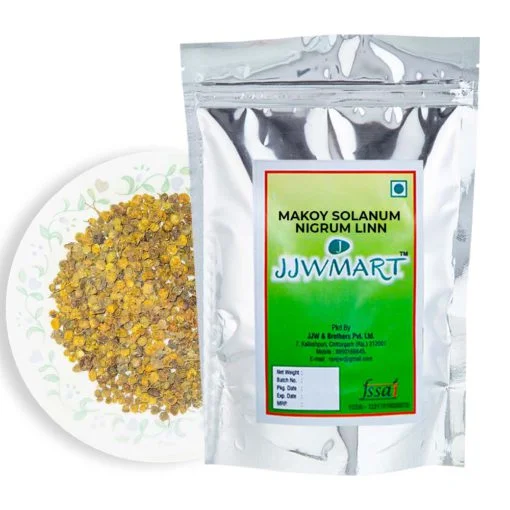
Buy Solanum Nigrum Online: Buy Now
FAQs:
1. What are the main Solanum nigrum benefits?
It is mainly known for supporting liver health, digestion, detoxification, and overall wellness.
2. Is Makoy safe for daily use?
Yes, when used in proper form and recommended amounts.
3. Are Makoy and Mokoi the same?
Yes, both are regional names for Solanum nigrum, also known as Black Nightshade.
4. Can it help with skin health?
It is traditionally used to support clear and healthy skin.
Final Thoughts
Solanum nigrum, also known as Makoy or Black Nightshade, remains an important herb in Ayurvedic traditions. Its role in supporting liver health, digestion, and overall balance makes it a useful addition to a natural lifestyle.
When used correctly, it can support daily wellness in a gentle and natural way.
